What is an adjustable barbell set?
At its core, an adjustable barbell set consists of a barbell bar and a set of weight plates that you can add or remove to change the total weight. This fundamental design is what makes it so adaptable. The main benefits include the following:
Space-Saving & Cost-Effective: Instead of buying multiple fixed-weight barbells (like a 20kg, 30kg, and 40kg bar), one adjustable set with a few plates can give you all those weight options and more. This saves both valuable floor space and money .
Versatility for All Levels: Because you can change the weight, the same set can be used by a beginner just starting out and an advanced lifter looking to lift heavy. It allows you to perform a massive range of exercises, from squats and deadlifts to presses and rows, effectively working every major muscle group .
Progressive Overload: This is a key principle for building muscle and strength. An adjustable barbell makes it easy to gradually increase the weight you lift over time, which is essential for making continuous progress.

The Different Types of Adjustable Barbells
Not all adjustable barbells are created equal. They mainly differ in how you change the weight and what they can transform into.
Traditional (Spin-Lock) Barbells: This is the most basic and often most affordable type. You slide weight plates onto the ends of the bar and screw on a spin-lock collar to hold them in place. They are very secure but can be time-consuming to adjust, especially between sets.
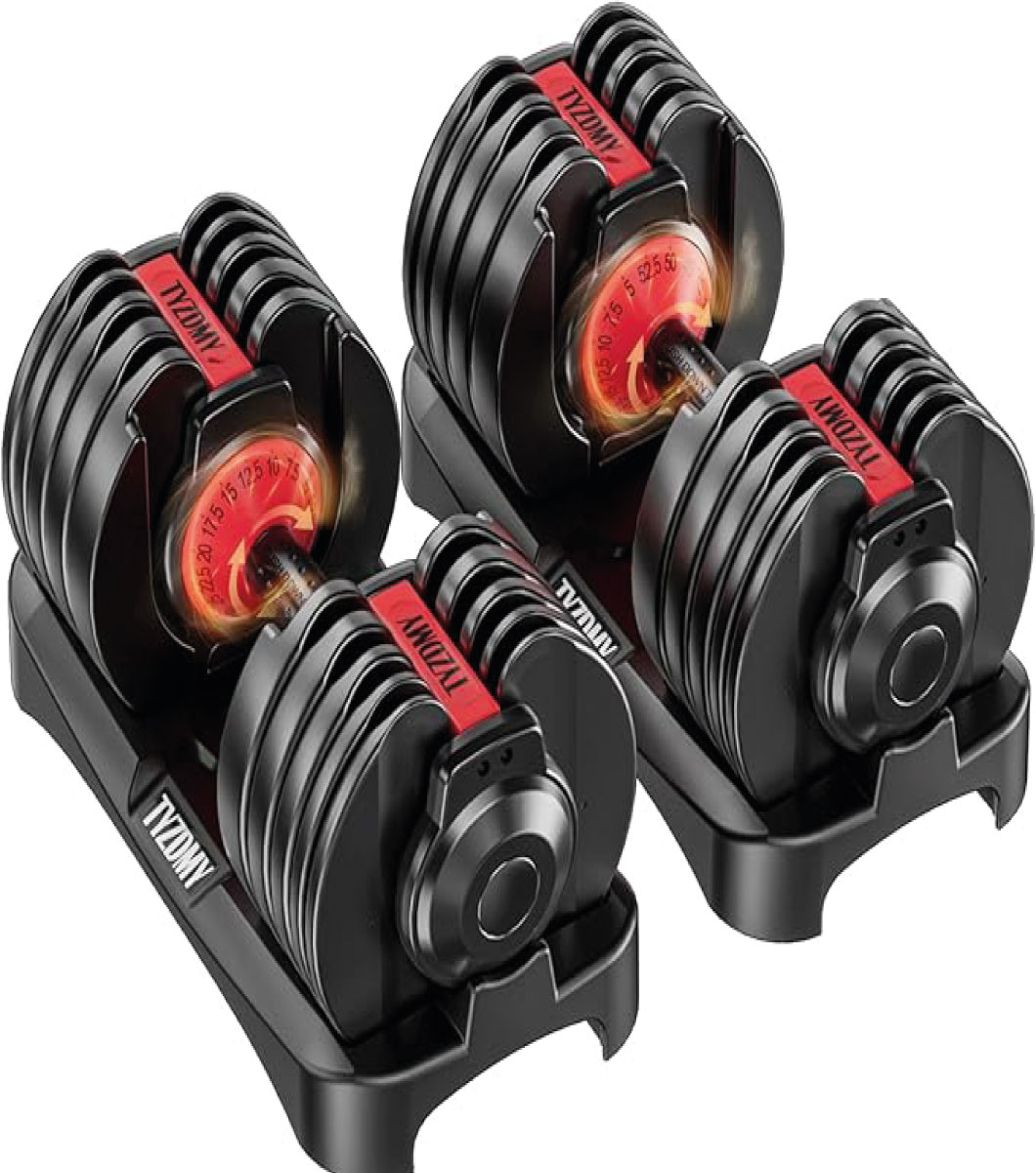
Quick-Change / Speed-Adjust Barbells: These are designed for convenience. They feature mechanisms like selector pins, dials, or sliding cams that lock onto the weight plates . You simply turn a dial or move a selector to choose your weight, and the unused plates remain on the stand. The BYZOOM FITNESS 80LB set, for example, offers 14 different weight settings that can be changed in seconds.
Multi-Use / Convertible Systems: This is where adjustable barbells get really clever. These comprehensive sets are designed to be disassembled and reconfigured into multiple pieces of equipment. A single set can transform into a barbell, two dumbbells, a kettlebell, and even push-up handles . This is the ultimate space-saver, giving you a full range of workout options from one compact box.
Key Features to Look For
When you’re shopping for an adjustable barbell set, keep an eye out for these important details:
Bar Type: Does the set come with different bars? Some include both a straight bar for exercises like bench presses and a W-bar (or EZ-curl bar) , whose angled shape is easier on your wrists for bicep curls and tricep exercises.
Weight Range and Increments: Consider your current fitness level and future goals. Sets can range from lighter 20kg kits to heavier options like 80 lb (~36 kg) or even massive 100kg+ Olympic sets with standard 2-inch plates . Also, check the weight increments to ensure you can make small, manageable progressions.
Plate Material:
Cast Iron: Durable and cost-effective.
Rubber-Coated: A great choice for home gyms, as they are quieter, less likely to dent, and more protective of your floor if you have to put the weight down .
Steel-Filled: Some modern sets use sleek plastic shells filled with steel for a more compact and premium feel.
Locking Mechanism: For traditional sets, look for secure collars. For quick-change sets, ensure the mechanism (like the StrongLock S slider) feels sturdy and locks into place positively, with no wobble.
Included Stand/Frame: Many higher-end adjustable sets come with a dedicated stand or seat frame . This is crucial for keeping the system organized, protecting the mechanism, and making weight changes quick and effortless.
Is an adjustable barbell set right for you?
To help you decide, here is a quick summary of the pros and cons:
Advantages:
Supreme space efficiency: One set can replace a whole rack of weights.
Cost-effective: Cheaper than buying multiple separate barbells and dumbbells.
Versatile: Suitable for a huge variety of exercises and all fitness levels.
Quick weight changes: Especially with modern speed-adjust systems.
Disadvantages:
Adjustment time: Traditional spin-lock sets can be slow and tedious to change.
Durability concerns: Quick-change mechanisms can sometimes be a point of failure compared to a solid fixed barbell.
Max weight limit: Some compact adjustable sets may not be able to handle the extremely heavy weights that serious powerlifters need.
Cost of advanced sets: High-end, multi-use systems with quick-change features are a significant investment.
I hope this detailed overview helps you understand the world of adjustable barbell sets. To give you a more specific recommendation, it would be helpful to know a bit more about what you’re looking for. What is your approximate budget, and what are your main fitness goals?
1. What is an adjustable barbell set?
An adjustable barbell set is a versatile weight training system that allows you to change the weight plates on a single bar. Instead of buying multiple barbells, you can easily increase or decrease the weight to match your workout level.
2. What exercises can I do with an adjustable barbell set?
You can perform a full-body workout, including:
Squats , Deadlifts ,Bench press or Shoulder press and Rows , Lunges or Bicep curls and Tricep extensions
It’s perfect for strength training, muscle building, and fat loss.
3. How much weight does an adjustable barbell set include?
Most sets range from 20kg (44 lbs) to 100kg (220 lbs) depending on the model. Some sets include multiple weight plates so you can gradually increase resistance as you get stronger.
4. Is an adjustable barbell set good for beginners?
Yes! It’s ideal for beginners because you can start with lighter weights and increase gradually. It’s also great for advanced users who want progressive overload without buying new equipment.
5. Can I use it as dumbbells too?
Many adjustable barbell sets come with connector rods that allow you to convert the barbell into two dumbbells. This makes it a space-saving 2-in-1 fitness solution for home gyms.
6. Is it safe to use at home?
Yes, as long as: Collars are tightly secured , Plates are properly locked , You use correct form
Always start with manageable weight and use a flat, stable surface.
7. What materials are adjustable barbells made from?
Common materials include:
Cast iron plates , Cement-filled plates with plastic coating
Chrome or stainless steel bars or Rubber-coated weight plates
Rubber-coated plates are quieter and protect your floor.
8. How much space do I need?
Adjustable barbells are perfect for small spaces. You only need:
About 6–7 feet of length for barbell exercises
A small storage area for plates
It’s much more compact than a full gym setup.
9. Is it better than a fixed barbell?
Yes, for home use. Adjustable barbells:
Save money and Save space or Replace multiple weight sets , Allow progressive weight changes
Fixed barbells are more common in commercial gyms.
10. How do I maintain my adjustable barbell set?
Wipe down after use or Store in a dry place , Check collars regularly and Avoid dropping if plates are cement-filled
Proper care increases durability and safety.
11. What is the average price of an adjustable barbell set?
Prices typically range between $80 – $300, depending on total weight, material quality, and brand.
12. Is an adjustable barbell set worth it?
Absolutely. If you want to build muscle, lose fat, or improve strength at home without paying for a gym membership, it’s one of the best fitness investments you can make.
1. What is an adjustable barbell set?
An adjustable barbell set consists of a barbell bar (usually 5–7 ft long) and multiple weight plates that you add or remove to change the total load. It replaces several fixed-weight barbells.
2. What are the key condition checks before each use?
Always inspect the set before lifting:
Bar threads/sleeves: Look for rust, cracks, or stripped threading (for screw-lock types).
Collars/locks: Ensure they tighten fully without slipping.
Plates: Check for chips, sharp edges, or loose inserts.
Spinlock or spring clips: Replace if they no longer hold tension.
Do not use if any part is bent, cracked, or fails to lock securely.
3. How do I maintain the barbell in good condition?
Clean after every use: Wipe off sweat to prevent rust.
Lube moving parts: Light machine oil on threaded collars every 2–4 weeks.
Store flat: Never lean the bar vertically with plates on – warps the bar.
Check torque: Re-tighten locking collars between sets.
4. Can I drop the adjustable barbell on the floor?
No. Adjustable bars are not designed for drops (unlike Olympic bumper plates). Dropping can:
Bend the bar
Crack the plates
Loosen or strip the locking mechanism
→ Always lower the bar under control.
5. What is the weight capacity? Does condition affect it?
Most home adjustable sets hold 100–200 lbs max.
Condition directly reduces capacity:
Rust or pitting on the bar → derate capacity by 30–50%.
Worn threads → risk of collar flying off under heavy loads.
If the bar shows any wear, never exceed 70% of the original max rating.
6. How often should I replace parts?
Spring clips: Every 6–12 months (or when loose).
Spinlock collars: When threads feel gritty or skip.
Bar: Immediately if bent (roll on a flat surface to check).
Plates: If a plate wobbles on the sleeve or has a visible crack.
7. Are adjustable barbells safe for squats and deadlifts?
Yes, but with strict condition notes:
Squats: Use a squat rack. If the collar fails, plates slide inward – avoid.
Deadlifts: Use double locking (e.g., collar + clip) to prevent plate shift.
Overhead lifts: Inspect collars between every set.
8. What storage conditions prevent damage?
Humidity below 50% – avoid basements without dehumidifier.
Rubber or vinyl plates – keep away from heat sources (melting risk).
Cast iron plates – coat with light oil if storing >1 month.
Never store with weights loaded – bar will take a permanent bend.
9. How do I know if the bar’s condition is unsafe?
Red flags – stop using immediately:
Bar spins inside the sleeve when locked.
Collar loosens by hand after tightening.
Visible bend or dent anywhere on the shaft.
Weight plates have wobble or play when locked.
10. Can I mix plates from different brands?
Only if the hole diameter matches exactly (e.g., 1-inch or 2-inch). Mismatched plates cause uneven loading, accelerated wear, and collar failure.
11. Does warranty cover wear from normal use?
Most budget sets exclude:
Rust from sweat/moisture
Thread wear
Bent bars from improper storage or dropping
→ Read the fine print. Keeping a maintenance log helps warranty claims.
12. Final condition rule of thumb:
If you wouldn’t trust it to hold the weight over your head or chest, don’t lift with it. A $100 barbell set is not indestructible – treat it like a precision tool, not a beater ba
Conclusion: The Adjustable Barbell Set – A Smart Choice, But Only If You Respect Its Condition
An adjustable barbell set offers exceptional value for home gym users, beginners, and those with limited space. It replaces multiple fixed barbells, saves money, and supports a wide range of exercises—from bench presses and rows to squats and deadlifts. For most non-competitive lifters, a well-maintained adjustable set provides more than enough versatility and progressive overload potential.
However, its greatest strength is also its greatest vulnerability. Unlike a solid, welded barbell, an adjustable barbell relies entirely on small mechanical parts—threaded collars, spring clips, or locking nuts—to keep weight plates secure. If any component is rusted, bent, worn, or improperly tightened, the entire system becomes dangerous. A plate that shifts mid-lift can cause serious injury, and a bent bar can ruin your form permanently.
Therefore, owning an adjustable barbell set is not a “set it and forget it” investment. It demands:
Regular inspections before every workout.
Discipline in storage (never loaded, never leaning, humidity controlled).
Immediate replacement of worn collars, clips, or damaged plates.
Respect for weight limits – especially as the bar ages.
When treated properly, an adjustable barbell set will serve you safely for years. When neglected, it becomes a liability. In short: The barbell is only as good as its condition. Check it, clean it, and never lift with doubt.
Final verdict: Highly recommended for home use – provided you commit to the maintenance and condition checks outlined in this guide.

Reviews
There are no reviews yet.