
Building a home gym is about more than just collecting equipment—it’s about creating a space where you can build strength, confidence, and consistency. At the heart of any serious fitness setup lies one essential tool: the olympic barbell.
From the moment you grip its knurled steel shaft, you’ll understand why it’s the gold standard in gyms worldwide. Whether you’re a beginner picking up an empty bar for the first time or an advanced lifter chasing new personal records, the olympic barbell delivers versatility, durability, and performance that standard bars simply cannot match.
In this guide, we’ll explore everything you need to know about this iconic piece of equipment—from olympic barbell dimensions and weight specifications to the best olympic barbell set options for your home gym. By the end, you’ll be ready to make an informed purchase and start crushing your fitness goals.
What Is an Olympic Barbell?
An it is a standardized piece of strength training equipment used in competitive Olympic weightlifting, powerlifting, CrossFit, and general fitness. Unlike ordinary bars found in big-box stores, olympic barbell specs are strictly regulated to ensure consistency across competitions and training environments.
Here are the key specifications that define a true olympic barbell:
Weight: Men’s bar = 20 kg (44 lbs); Women’s bar = 15 kg (33 lbs)
Length: Men’s = 7.2 ft (2.2 m); Women’s = 6.6 ft (2.0 m)
Sleeve diameter: 2 inches (50 mm)
Shaft diameter (grip): Men’s = 28 mm; Women’s = 25 mm
Loadable sleeve length: Approximately 16 inches
If you see a bar advertised as olympic barbell 20kg or it 45 lbs, it’s almost certainly a men’s standard bar. Women’s bars are labeled olympic barbell 15kg and feature a thinner 25 mm grip for smaller hands.
Olympic Barbell vs. Standard Barbell
One of the most common questions beginners face is whether to buy an olympic barbell vs standard bar. While both allow you to perform basic lifts like squats, bench presses, and rows, the differences are significant:
| Feature | Olympic Barbell | Standard Barbell |
|---|---|---|
| Sleeve diameter | 2 inches (50 mm) | 1 inch (25 mm) |
| Weight | 20 kg men / 15 kg women | 10-20 lbs (varies) |
| Length | 7 ft / 6.6 ft | Usually 5-6 ft |
| Load capacity | 700+ lbs (many up to 1500 lbs) | Typically 100-300 lbs |
| Sleeve rotation | Bearings or bushings | Fixed (no rotation) |
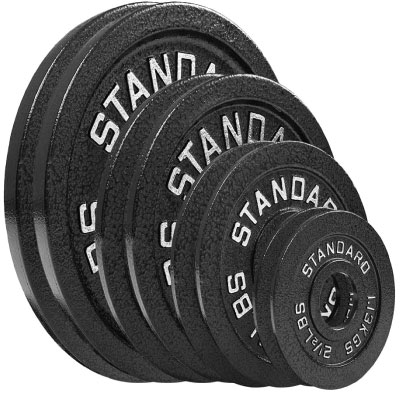
it sleeve diameter of 2 inches is critical—it accommodates olympic weight plates with 2-inch center holes, which are thicker, more durable, and designed to handle heavy loads. Standard bars use 1-inch plates that are generally lower quality and less stable under heavy weight.
Olympic barbell weight capacity far exceeds that of standard bars. Most olympic barbell bars are rated for 700–1500 lbs, while standard bars often max out around 300 lbs. If you plan to progress beyond beginner weights—and you will—the olympic barbell is the smarter long-term investment.
Types of it
Not all olympic barbell bars are created equal. Different training styles require different characteristics. Here’s a breakdown of the main types:
Men’s Olympic Barbell
- Weight: 20 kg / 45 lbs
- Shaft diameter: 28 mm
- Best for: General weightlifting, squats, deadlifts, bench press
- Women’sl
- Weight: 15 kg / 33 lbs
- Shaft diameter: 25 mm
- Best for: Female lifters, smaller hands, technique development
- Powerlifting Barbell
- Shaft diameter: 29 mm (thicker for stability)
- Knurling: Aggressive for maximum grip
- Flex (whip): Very stiff to minimize bar oscillation during heavy squats and deadlifts
- Sleeve rotation: Bronze bushings (robust, minimal spin)
Weightlifting Barbell
Shaft diameter: 28 mm men / 25 mm women
Knurling: Medium depth, often with IWF markings
Flex (whip): Moderate whip to assist with explosive snatches and clean & jerks
Sleeve rotation: Needle bearings for fast, smooth spin during dynamic lifts
Multipurpose/Hybrid Barbell
haft diameter: 28.5 mm (compromise between 28 mm and 29 mm)
Knurling: Medium, with dual IPF/IWF marking
Best for: Garage gyms, CrossFit, lifters who want one bar for everything
Specialty Bars
Olympic barbell short (6 ft or less): Great for limited spaces
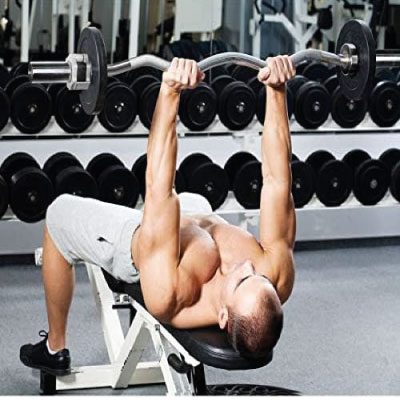
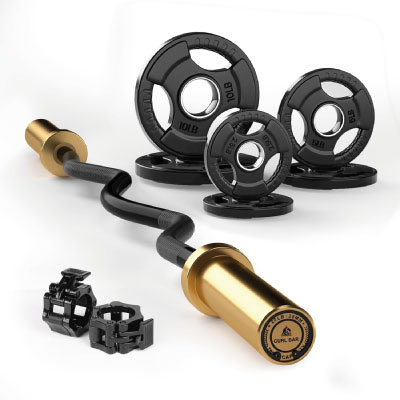
EZ curl bars: For targeting biceps and triceps
Trap/Hex bars: Neutral grip for deadlifts
Safety squat bars: Reduce shoulder strain during squats
Key Features to Look For
When shopping for an olympic barbell, understanding the key features will help you make a smart investment that lasts for years.
- Knurling (Grip Pattern)
- Knurling is the crosshatch pattern on the shaft that prevents the bar from slipping in your hands. The aggressive powerlifting knurling for enhanced grip during heavy lifts like deadlifts.
- Light knurling: Gentle on hands, suitable for high-rep work
- Medium knurling: Versatile, good for most lifters
- Aggressive knurling: Sharp grip for heavy powerlifting, may tear hands if you’re not used to it
- Knurl marks: Centre knurl can scrape your chest during Olympic lifts, and dual markings help with proper hand placement. IWF marks are spaced 36 cm (14.2 inches) apart; IPF marks are spaced 32 cm (12.6 inches) apart.
- Whip (Flex)
- Whip refers to how much the bar bends under load. Weightlifting bars have more whip to assist with explosive snatches and cleans, while powerlifting bars are stiffer for stability during heavy squats and deadlifts.
Sleeve Rotation (Bearings vs. Bushings)
Needle bearings: Provide fast, smooth spin—ideal for Olympic lifts
Bronze bushings: More durable, slower rotation—perfect for powerlifting
Hybrid (bearing + bushing): Compromise for multipurpose use
Tensile Strength
Measured in PSI (pounds per square inch). Higher tensile strength means the bar can handle more weight without permanently bending. Look for:
150,000–180,000 PSI: Decent for moderate use
190,000–200,000 PSI: Excellent quality, found in premium bars
205,000+ PSI: Elite-level strength for serious powerlifting
Coating/Finish
The coating affects durability, rust resistance, and knurling feel:
Bare steel: Best grip, but requires regular oiling to prevent rust
Black zinc: Moderate rust resistance, slightly slick (can fill in knurling)
Chrome: Very durable, easy to clean, but may be slippery
Cerakote: Excellent corrosion resistance, comes in custom colors
Stainless steel: Ultimate corrosion resistance, maintains great grip
Benefits of Using it
- Why invest in an olympic barbell for your home gym? Here are the most compelling reasons:
- 1. Full-Body Strength Training
- From squats and deadlifts to bench presses and overhead presses, one bar gives you access to compound movements that engage multiple muscle groups simultaneously.
- 2. Progressive Overload Made Easy
- The standardized olympic barbell weight allows you to precisely track progress. Adding small increments (2.5 lb or 5 lb plates) lets you gradually increase load—the key driver of muscle and strength gains.
- 3. Versatility Across Exercises
- With an olympic barbell set, you can perform dozens of exercises. Add an olympic barbell landmine attachment to unlock rotational movements and T-bar rows, expanding your training options without buying more bars.
- 4. Gym-Quality Training at Home
- Commercial gyms rely on olympic barbell bars because they’re built to withstand years of heavy use. Bringing that same durability into your home gym means you’ll never outgrow your equipment.
- 5. Accessibility for All Levels
- Beginners can start with the olympic barbell 20kg (men) or olympic barbell 15kg (women) and add weight gradually. The empty bar itself is a challenging starting point for many new lifters.
Best Exercises with it
Your olympic barbell is capable of far more than basic lifts. Here’s a sample workout plan:
Day 1: Lower Body Strength
Back Squat: The king of leg builders. Place the bar across your upper back and squat deep.
Romanian Deadlift (RDL): Hit the hamstrings and glutes with this hinge movement.
Front Squat: Quad-focused variation requiring an upright torso.
Day 2: Upper Body Strength
Bench Press: Build chest, shoulders, and triceps.
Overhead Press (OHP): Seated or standing—develop shoulder strength and stability.
Bent-Over Row: Strengthen your back and improve posture.
Day 3: Explosive Power
Clean and Jerk: A two-part movement that builds total-body power.
Power Snatch: Lift the bar from floor to overhead in one smooth motion.
Clean and Press: A more accessible alternative to the full clean and jerk.
Accessory & Conditioning
Landmine Rows and Presses: Attach your olympic barbell to a landmine attachment for shoulder-friendly pressing and rotational core work.
Pendlay Rows: Strict rows from a dead stop.
Good Mornings: Strengthen the posterior chain with light weight.
For beginners, start with the empty olympic barbell 20kg (men) or 15kg (women) and focus on proper form. Add small increments (2.5–5 lbs per side) each session to safely build strength.
How to Choose the Best Olympic Barbell
With hundreds of options on the market, narrowing down the best olympic barbell for your needs can feel overwhelming. Use this decision framework:
Step 1: Define Your Training Goals
Powerlifting: Look for a 29 mm bar, aggressive knurling, center knurl, bronze bushings, 190K+ PSI tensile strength.
Olympic weightlifting: Choose 28 mm (men) or 25 mm (women), moderate whip, needle bearings, IWF knurl marks.
CrossFit / General fitness: Opt for 28.5 mm hybrid bar with dual knurl markings and bearing sleeves.
Step 2: Set Your Budget
Entry (100–100–200): Good for beginners, moderate quality, lower weight capacity. CAP Barbell’s entry-level bars fall here.
Mid-Range (200–200–400): Solid quality, decent spin, good tensile strength (170K–190K PSI), suitable for most home gyms.
Premium (400–400–800+): High-end materials, excellent knurling, smooth bearings, made in USA options (Rogue, Eleiko, Rep Fitness).
Step 3: Consider Space and Storage
Measure your workout area. An olympic barbell 7ft requires ample clearance—account for sleeve overhang when loaded. If space is tight, look for shorter options like a olympic barbell 6ft variant or a compact olympic barbell set with a 5-6 ft bar.
An olympic barbell stand or vertical holder keeps your bar safely stored and your floor space clear. Wall-mounted racks or floor stands are excellent accessories.
Step 4: Check Compatibility
Ensure your plates, collars, and rack are compatible. All olympic barbell bars require plates with 2-inch center holes. If you already own 1-inch plates, you can use an olympic barbell adapter sleeve to convert your bar to accept standard plates.
Top it Picks
Here are our top recommendations across different categories:
1. Budget Pick: CAP Barbell Classic 7-Foot Olympic Bar
Weight: 20 kg / 45 lbs
Sleeve diameter: 2 inches
Construction: Cold-rolled steel with chrome finish
Best for: Beginners, light to moderate use
Pros: Affordable, widely available (including olympic barbell amazon), gets the job done
Cons: Lower weight capacity (~500 lbs), olive oil or wd40 spray regular care required.
2. Mid-Range: Titan Fitness Performance Series
Weight: 20 kg / 45 lb
Tensile strength: 1500 lb rating
Sleeve: 50 mm diameter, 15.5 inches loadable length
Best for: Home gyms, powerlifting focus
Pros: Solid build, affordable, good for heavy lifts
Cons: Not ideal for fast Olympic lifts due to thicker shaft
3. Quality Pick: Rogue Ohio Bar (Stainless Steel)
Weight: 20 kg / 45 lbs
Knurling: Moderate depth, no center knurl
Tensile strength: 200,000 PSI
Best for: General strength, CrossFit, home gym enthusiasts
Pros: Exceptional quality, smooth spin, excellent resale value, made in USA
Cons: Premium price
4. Weightlifting Specialist: Eleiko IWF Weightlifting Training Bar
Weight: 20 kg or 15 kg
Sleeve rotation: Needle bearings
Tensile strength: Premium Eleiko steel
Best for: Competitive Olympic weightlifting, serious lifters
Pros: Competition-grade performance, incredible whip and spin, lasts a lifetime
Cons: Very expensive
5. Top Barbell & Weight Set: CAP Barbell 300 lb Olympic Set
Includes: 7 ft olympic barbell, 300 lbs of plates, spring collars
Plate increments: 45, 35, 25, 10, 5, 2.5 lbs
Best for: Beginners wanting an all-in-one olympic barbell and plates set
Pros: Everything you need to start, great value
Cons: Bar is entry-level quality, plates are cast iron (not bumper plates)
6. Recommended Specialist Bar: Rogue Bella Bar 2.0 (Women’s)
Weight: 15 kg / 33 lbs
Diameter: 25 mm
Tensile strength: 190,000 PSI
Best for: Female lifters, anyone needing a thinner grip
Pros: Dual knurl marks, no center knurl, smooth spin, beautiful zinc or e-coat finish
7. Best for Heavy Powerlifting: Rogue Ohio Power Bar (Stainless Steel)
Weight: 20 kg / 45 lbs
Knurling: Very aggressive for maximum grip
Construction: No whip (very stiff), ideal for squats and bench presses. Pair it with heavy-duty plates and an olympic barbell stand for a professional setup.
Pros: “quoted” Many people mention the knurling feels like sandpaper in the best way possible”
If you’re building from scratch, consider a comprehensive olympic barbell set with weights or an olympic barbell and bumper plates set to protect your floor during deadlifts and Olympic lifts.
Weight and Dimensions Guide
Here’s a complete reference table for olympic barbell dimensions and olympic barbell specs:
| Specification | Men’s Olympic Bar | Women’s Olympic Bar |
|---|---|---|
| Total weight | 20 kg (44.1 lbs) | 15 kg (33.1 lbs) |
| Total length | 2.2 m (86.6 in / 7.2 ft) | 2.01 m (79.1 in / 6.6 ft) |
| Shaft length | 1.31 m (51.5 in) | 1.31 m (51.5 in) |
| Shaft diameter | 28 mm (1.1 in) | 25 mm (1 in) |
| Sleeve diameter | 50 mm (2 in) | 50 mm (2 in) |
| Loadable sleeve length | ~415 mm (16.3 in) | ~320 mm (12.6 in) |
| Load capacity (typical) | 700–1500+ lbs | 500–1500 lbs |
These olympic barbell dimensions are standardized so plates, racks, and accessories work across all bars.
Note on weight: If you see an olympic barbell 45 lbs listed, that’s the Imperial equivalent of 20 kg. Some cheaper bars may weigh slightly less (16–18 kg), so check the product specifications carefully [11†L5-L8].
Maintenance and Care Tips
Your olympic barbell is an investment. Proper care keeps it performing well and prevents rust or damage.
Clean the Knurling Regularly
Chalk, sweat, and dead skin accumulate in the knurling, reducing grip effectiveness. Use a stiff nylon or brass bristle brush to scrub the grooves after each session. For deep cleaning, apply WD-40 or a mild soap solution, let it sit, then scrub with a brush and wipe dry.
Prevent Rust
After cleaning, apply a light coat of 3-in-1 oil or specialized barbell oil to the shaft and sleeves. Wipe off excess with a clean cloth to protect against moisture and oxidation.
Store Properly
Avoid leaning your bar against a wall—this can cause bending over time. Invest in an olympic barbell stand, vertical bar holder, or horizontal rack to keep the bar straight and safe. If storing long-term, keep the bar in a climate-controlled room to prevent moisture damage.
Inspect for Damage
Periodically check for sleeve wobble, strange noises during rotation, or visible bends. Address issues early to avoid equipment failure during heavy lifts.
Common Mistakes to Avoid
Even experienced lifters make these mistakes. Here’s how to avoid them:
Mistake 1: Using Standard Plates
Standard plates have 1-inch holes and will not fit securely on olympic barbell sleeves (2 inches). Using adapters ( olympic barbell adapter sleeve ) is possible but not recommended for heavy lifts due to stability concerns.
Mistake 2: Ignoring Load Capacity
Cheaper bars may have lower weight limits (e.g., 300–500 lbs). Exceeding the rated capacity can permanently bend the bar or cause catastrophic failure. Always check the manufacturer’s specifications.
Mistake 3: Poor Grip Technique
Holding the bar too high in the palm (near the fingers) reduces control and increases wrist strain. Grip the bar deep in the palm, thumb wrapped around the bar for safety.
Mistake 4: Neglecting Collars
Spring clips or lock collars are essential to prevent plates from sliding outward during lifts, especially dynamic movements like cleans or jerks. Always use collars rated for olympic barbell sleeves.
Mistake 5: Buying a Bar That’s Too Heavy for Your Space
While a full-sized olympic barbell 7ft is versatile, it requires significant clearance. Measure your workout area, including space for plate loading/unloading, before purchasing.
How much does an Olympic barbell weigh?
A standard men’s olympic barbell weight is 20 kg (44 lbs). A women’s bar weighs 15 kg (33 lbs). Some specialty bars (e.g., kid’s bars, technique bars) may weigh less.
What is the olympic barbell length?
Men’s bars are 7.2 ft (2.2 m) long, women’s bars are 6.6 ft (2.0 m) long. The shorter olympic barbell length for women makes the bar easier to maneuver during cleans and snatches.
Can beginners use it ?
Absolutely. Many beginners start with just the olympic barbell 20kg (or 15kg for women) to practice form before adding weight. Beginners can start safely with the empty bar and add small increments as strength improves.
What plates fit it
All olympic barbell bars require plates with a 2-inch (50 mm) center hole. This includes cast iron plates, rubber bumper plates, and competition-style plates. Bumper plates are especially useful if you plan to drop the bar during Olympic lifts.
Is it worth buying for a home gym?
Yes. A quality olympic barbell combined with a few hundred pounds of plates and a rack gives you access to the most effective strength-building exercises known to fitness. The upfront cost is quickly offset by years of gym membership savings.
How much weight can an l hold?
Most quality bars are rated for 700–1500 lbs. High-end bars like the Eleiko can handle up to 1500+ lbs. Always check the specific rating for your bar.
What’s the difference between an it vs standard barbell?
Olympic barbells have 2-inch sleeves, standard weight (20 kg/15 kg), higher weight capacity, and often feature rotating sleeves. Standard barbells have 1-inch sleeves, lighter weight (10-20 lbs), lower capacity, and fixed sleeves.
Where can I buy an it ?
You can find olympic barbell for sale at sporting goods stores, fitness equipment retailers, on olympic barbell amazon, and directly from manufacturers like Rogue, Titan, CAP, and Eleiko. Check olympic barbell facebook marketplace or olympic barbell near me searches for local deals.
What size is an sleeve?
Olympic barbell sleeve diameter is exactly 2 inches (50 mm). Olympic barbell sleeve length is approximately 16 inches for men’s bars and 12.5 inches for women’s bars.
What is an it landmine attachment?
A landmine attachment is a device that anchors one end of the barbell to the floor, allowing you to perform rotational exercises, T-bar rows, and landmine presses.
What is the it diameter in inches?
The olympic barbell diameter inches for men is 1.1 inches (28 mm); for women it’s 1 inch (25 mm).
What is olympic barbell weight kg?
Men’s olympic barbell weight kg is 20 kg; women’s is 15 kg.
What is the it length in cm?
Men’s olympic barbell length cm is 220 cm; women’s is 201 cm.
What is it weight in lbs?
Men’s olympic barbell weight in lbs is 44 lbs; women’s is 33 lbs.
What is it. ?
An olympic barbell is a standardized weightlifting bar used in competitive weightlifting and strength training, featuring specific olympic barbell dimensions (20 kg men/15 kg women, 2-inch sleeves) designed to withstand heavy loads.