Upgrade your training with the st workoutbebenches for home gym setups. From adjustable benches to flat and incline designs, workout benches support a wide range of exercises for chest, arms, and core. A durable workout bench is a must-have piece of equipment for anyone serious about strength training and full body workouts.
adjustable barbell set
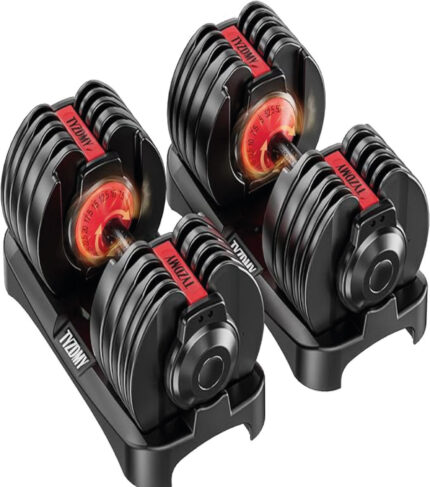
Building a home gym is an exciting step toward fitness independence. But with so many options—from massive barbell sets with racks to compact machines—where do you even begin? For most people, the smartest, most versatile, and space-efficient starting point isn't a bulky 200 lb weight set with a bar but a modern adjustable dumbbell set of 2.
Let’s explore why this single piece of equipment is often the superior choice over a traditional fixed barbell set for building your foundational home fitness space.
The All-in-One Advantage: Your Entire Dumbbell Rack in One Footprint
Imagine replacing an entire wall of individual dumbbells with two compact units that sit neatly in a corner. That's the promise of a quality adjustable dumbbell set. Unlike a fixed barbell set or a bulky barbell weight set with rack, these intelligent systems use a dial, pin, or magnetic mechanism to let you change weights in seconds—from 5 pounds for lateral raises to 50+ pounds for heavy presses.
Key Benefits for the Home Gymmer:
Unmatched Space Saving: The number 1 advantage. Perfect for apartments, spare bedrooms, or home gyms in small spaces.
Cost-Effectiveness: Adjustable Barbell Set: Buying a full range of individual dumbbells is prohibitively expensive. A good set like the Bowflex SelectTech or NordicTrack iSelect provides incredible value.
Workout Versatility: Facilitates complex workouts with drop sets, supersets, and full-body circuits without constantly swapping multiple pairs of dumbbells. adjustable barbell set
Accessibility for All Levels adjustable barbell set: Whether you're searching for an adjustable dumbbell set for women starting out or a set for men looking to build strength, the adjustable range grows with you.
Workout Benches: The Complete Guide to Choosing, Using, and Loving Your Weight Bench
A workout bench seems simple. It’s just a padded platform on legs, right? But walk into any fitness store, and you’ll be overwhelmed by options: flat benches, adjustable benches, FID benches, Olympic benches, foldable benches, and benches that cost $100 or $1,000.
Here’s the truth: Your workout bench is the second most important piece of home gym equipment (after your weights). A bad bench wobbles, feels unstable, and limits your exercises. A great bench transforms your workouts, lasts a decade, and keeps you safe under heavy loads.
This guide covers everything you need to know about workout benches: the different types, what features matter, which ones to avoid, and how to use a bench for full-body training.
Why a Dedicated Workout Bench Beats a Regular Chair
You might think you can just use a sturdy chair or an exercise ball. Don’t. Here’s why a real workout bench matters:
-
Stability: A proper bench is built to handle hundreds of pounds without tipping or wobbling. A dining chair isn’t.
-
Proper height: Benches are designed so your feet plant flat on the floor when lying down. Too high or too low ruins your pressing mechanics.
-
Padding: Good benches have dense foam that supports your spine and shoulders without compressing completely.
-
Versatility: Adjustable benches change angles for incline, decline, and seated exercises. A chair can’t do that.
If you own dumbbells or a barbell, a bench is not optional. It’s essential.
The 4 Main Types of Workout Benches
Let’s break down the categories so you know exactly what you’re buying.
1. Flat Benches
The simplest design: a horizontal padded surface on four legs. No adjustments. No moving parts.
Pros: Cheapest option ($50–$200). Most stable design. No wobble or failure points. Great for bench press, dumbbell presses, step-ups, and seated rows.
Cons: Only one angle. No incline or decline. Limited exercise variety.
Best for: Pure strength athletes who only do flat pressing. Budget home gyms.
2. Adjustable Benches (Incline/Decline)
These benches have a back pad that moves through multiple angles, typically from -15° (decline) to 85° (nearly upright). Most adjust in 10–15 degree increments.
Pros: Huge exercise variety. Incline presses target upper chest. Upright settings turn the bench into a seat for shoulder presses. Decline settings hit lower chest and abs.
Cons: Heavier and bulkier than flat benches. More moving parts mean potential wobble. Costs more ($150–$600).
Best for: Most home gym users. Anyone who wants a single bench for everything.
3. FID Benches (Flat, Incline, Decline)
FID is a marketing term that simply means the bench does all three: flat, incline, and decline. Some adjustable benches don’t do decline (the back pad won’t go negative). FID benches specifically include decline positions.
Pros: Maximum versatility. Often includes leg rollers for decline sit-ups or leg curls.
Cons: Heavier and more complex. Decline positions require extra floor space behind the bench.
Best for: Bodybuilders and serious home gym enthusiasts.
4. Foldable / Compact Benches
These benches are designed for small spaces. They fold in half or have collapsing legs to slide under a bed or into a closet.
Pros: Tiny storage footprint. Lightweight (20–30 lbs). Often cheap ($80–150).
Cons: Less stable. Lower weight capacity (often 300 lbs vs. 600+ lbs for full-size benches). Padding is usually thinner.
Best for: Apartment dwellers, travelers, or anyone who needs to hide their gym gear.